
How to Build an Energy-Efficient Home: An Architect's Guide
Step into a well-designed, energy-efficient home and the difference is palpable: the temperature is consistent from room to room, the air is fresh without a window cracked, and the outside noise fades away.
Noah Fitch, an architect at Boston-based ZeroEnergy Design (ZED), has spent his career designing energy-efficient homes that perform at the highest level and knows what matters most. “We think of energy-efficiency as part of a bigger picture. The homes we design prioritize health, comfort, durability, and resilience—outcomes that naturally lead to strong energy performance.”
The following is an architect’s guide to building an energy-efficient home—and what anyone designing one should understand before they start.
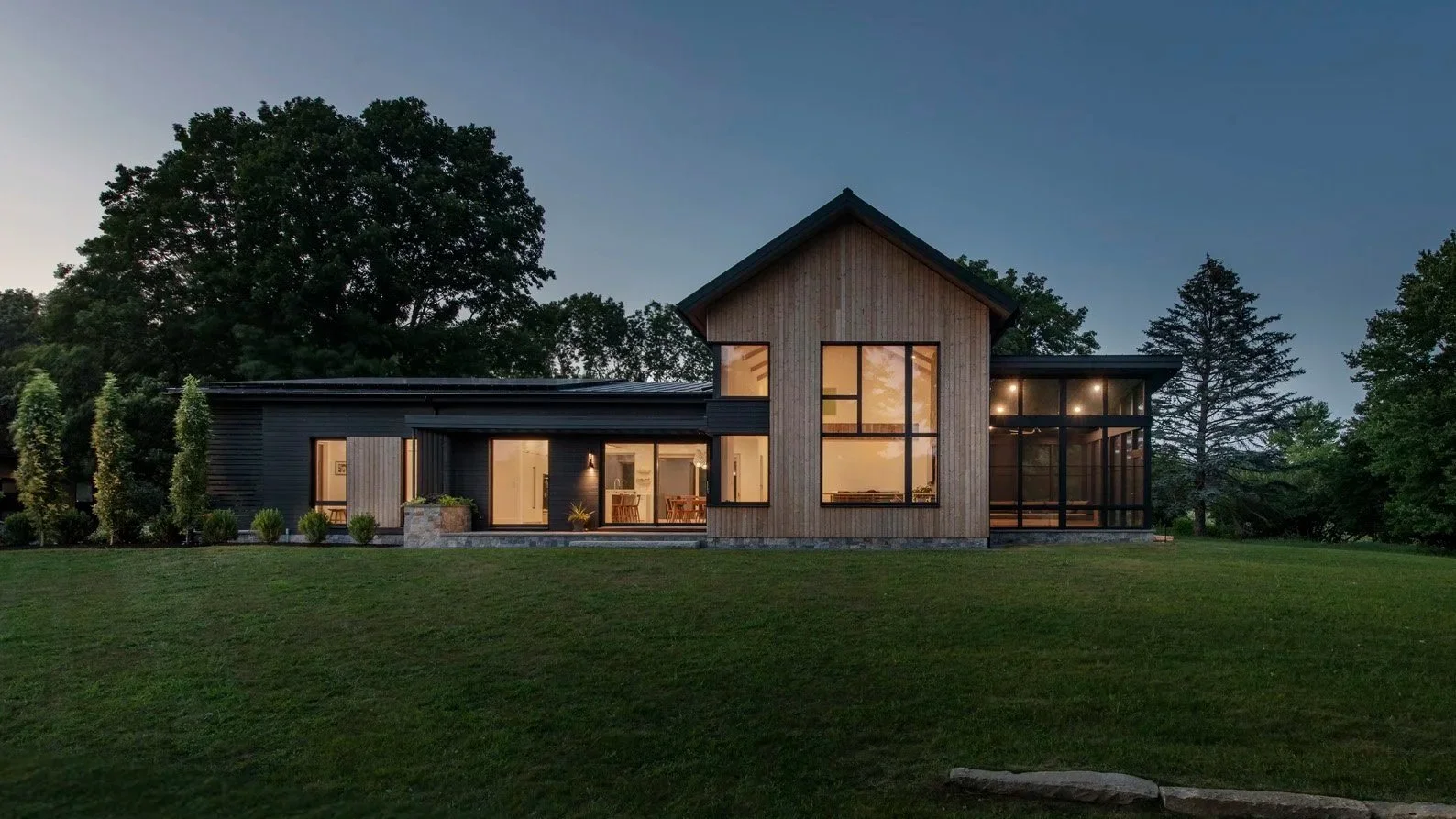
Noah Fitch recently designed this Passive House Certified home in Stow, MA.
Start with the site, not the floor plan.
When it comes to building an energy-efficient home, the most powerful decisions happen before the floor plan is sketched, before a contractor is hired, before any product is specified. They happen on the site itself.
“We don’t start designing until we’ve visited the site,” Fitch says. “If you jump into design too early, you risk forming a preconceived idea that everything else has to work against. But when you fully understand the site and the client’s needs upfront, the solution can respond more directly—and more clearly—to both.”
Where a home is sited on its property, how it responds to the sun, where the windows are located—these decisions determine the baseline performance of everything that follows. A home oriented and shaped for its climate uses the sun as a passive heating source in winter and shades itself naturally in summer. In New England, where winter sun angles are low and summer sun is high, getting this right changes how the home performs and how it feels.
A recent project in Stow illustrates the point. The home was carefully sited to capture views of the golf course and adjacent conservation land, while maintaining privacy from a nearby multifamily development. Its placement responds directly to those conditions, with two south-facing shed roofs designed to support long term solar production. Each of these decisions was resolved before the design took shape.
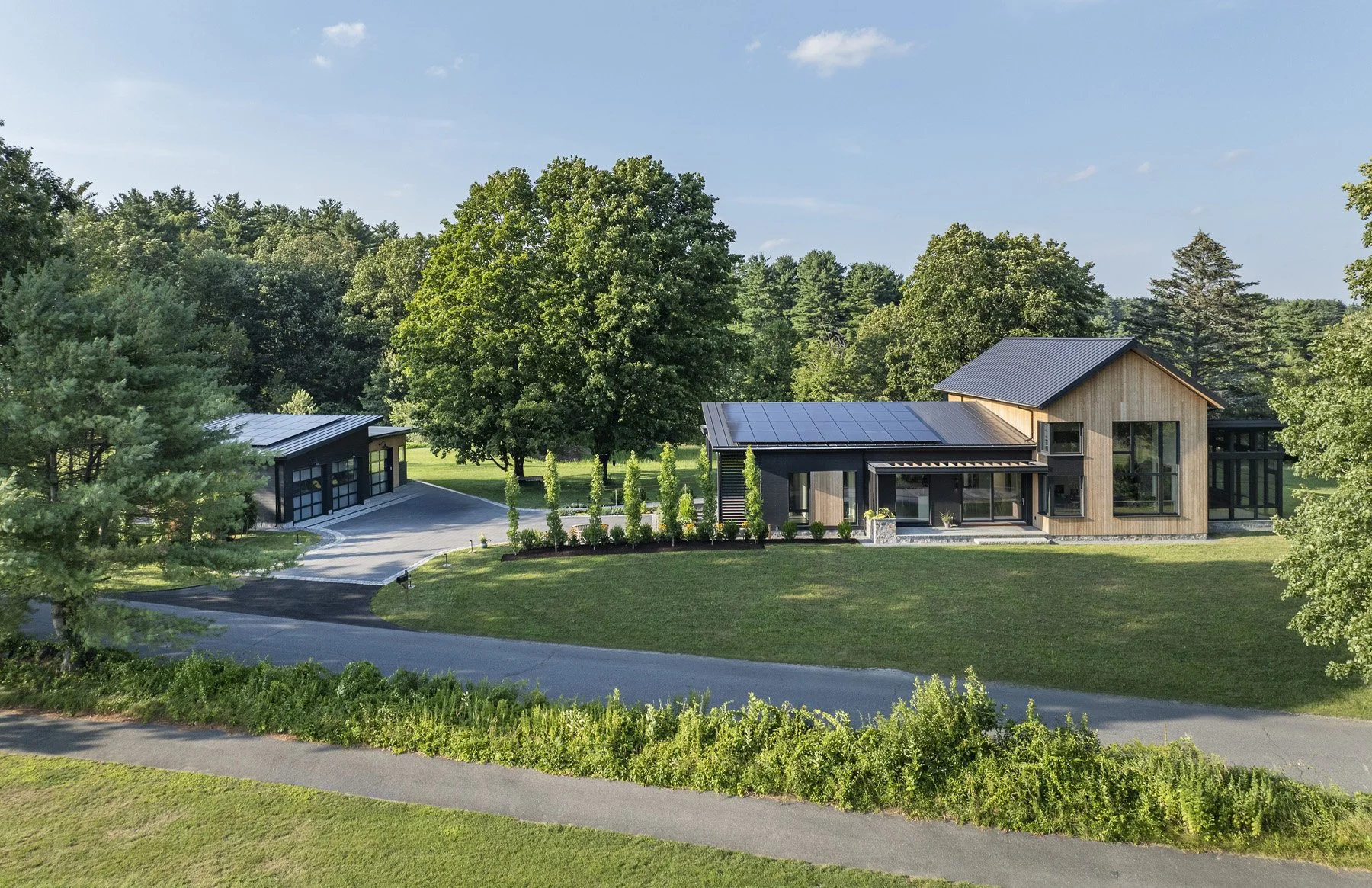
High performance home in Stow Massachusetts designed by ZeroEnergy Design.
The building envelope is where performance is designed.
The building envelope (the walls, roof, and foundation) controls four things: water, vapor, thermal performance, and air. ZED treats these as a single, integrated system, directly shaping how the building performs.
"Getting the envelope right requires building science expertise and precise detailing,” Fitch explains, “The weaker the envelope, the harder the heating and cooling systems have to work. The more refined the envelope, the less they’re needed. In our homes, systems run quietly in the background, creating such a comfortable indoor environment that owners forget about the thermostat."
No roaring HVAC kicking on and off, no hot or cold spots—just even, quiet comfort. These three elements make that possible:
Continuous insulation. The envelope is wrapped without interruption—no gaps and no thermal bridges where structure penetrates insulation and conducts heat outward. Eliminating those weak points is the difference between a home that holds its temperature and one that doesn't.
Airtightness. A typical new home in Massachusetts achieves air leakage rates of two air changes per hour. A high-performance home targets 0.6 or below—with ZED achieving as low as 0.049 on certain projects. That level of airtightness keeps conditioned air in and gives full control over ventilation—something that’s nearly impossible to fix after construction.
High-performance windows. Triple-pane glazing completes the envelope system, delivering not just energy efficiency, but a higher level of comfort.
Considering a high-performance custom home in New England? ZeroEnergy Design would welcome the conversation. Tell us about your project. →
Windows: the comfort case is stronger than the efficiency case.
Most homeowners think about windows primarily as a source of heat loss. That thinking can lead to smaller openings, positioned conservatively—making homes darker and more closed off from their landscape.
Triple-pane windows keep interior glass surfaces warm, even in winter. You can sit beside a window in January and feel the light—not the cold—creating more useable space than a typical New England home throughout the seasons. That same performance also reduces outdoor noise, limits condensation, and allows for larger openings without an energy penalty.
More light also brings a deeper connection to the landscape. "If we've done our job correctly, from a spatial perspective, you have specific views we've framed that create these moments of awe and wonder," Fitch says.
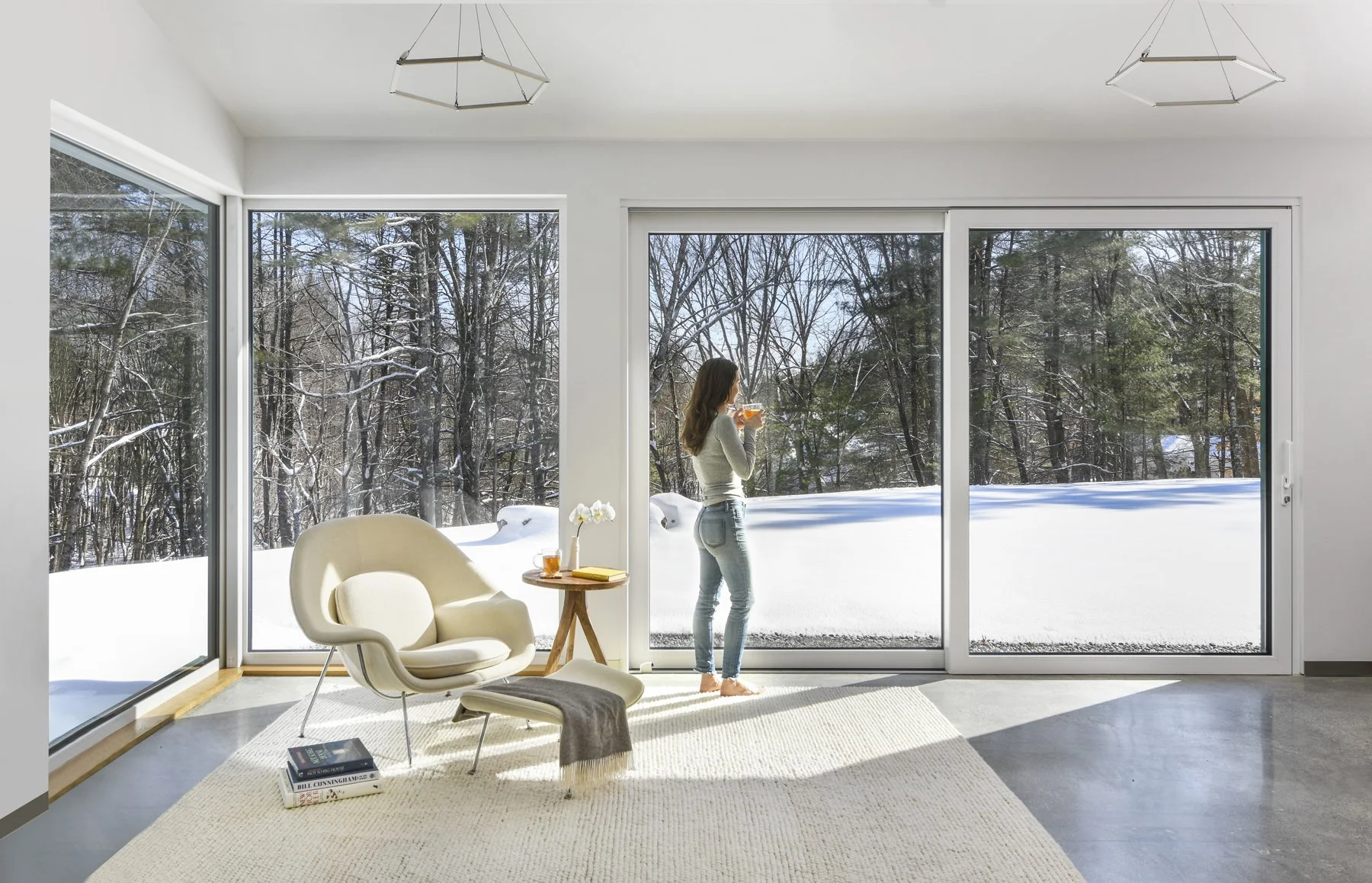
This Passive House Certified home in Acton frames nature with giant triple-paned sliders in the primary living space.
Mechanical systems—smaller is better.
A well-designed envelope reduces the load on the mechanical systems in the home. When the envelope performs, a smaller, simpler system maintains comfort with minimal effort.
Heat pumps handle both heating and cooling in one all-electric system—clean operation, no fossil fuels, no gas lines, just quiet, even performance. But ventilation deserves particular attention.
An airtight home requires mechanical ventilation, and this turns out to be one of the features occupants value most once they have lived with it. Heat Recovery Ventilators deliver filtered fresh air to every room, improving indoor air quality while reducing allergens.
"My perspective is that everybody is sensitive to air quality," Fitch says. "Some people recognize it, others don’t—but the impact is there either way."
Over time, it’s the air quality people notice most. Many describe better sleep, deeper rest, and a subtle but meaningful shift in how the home feels—an awareness of what it’s like to live in a truly healthy home.
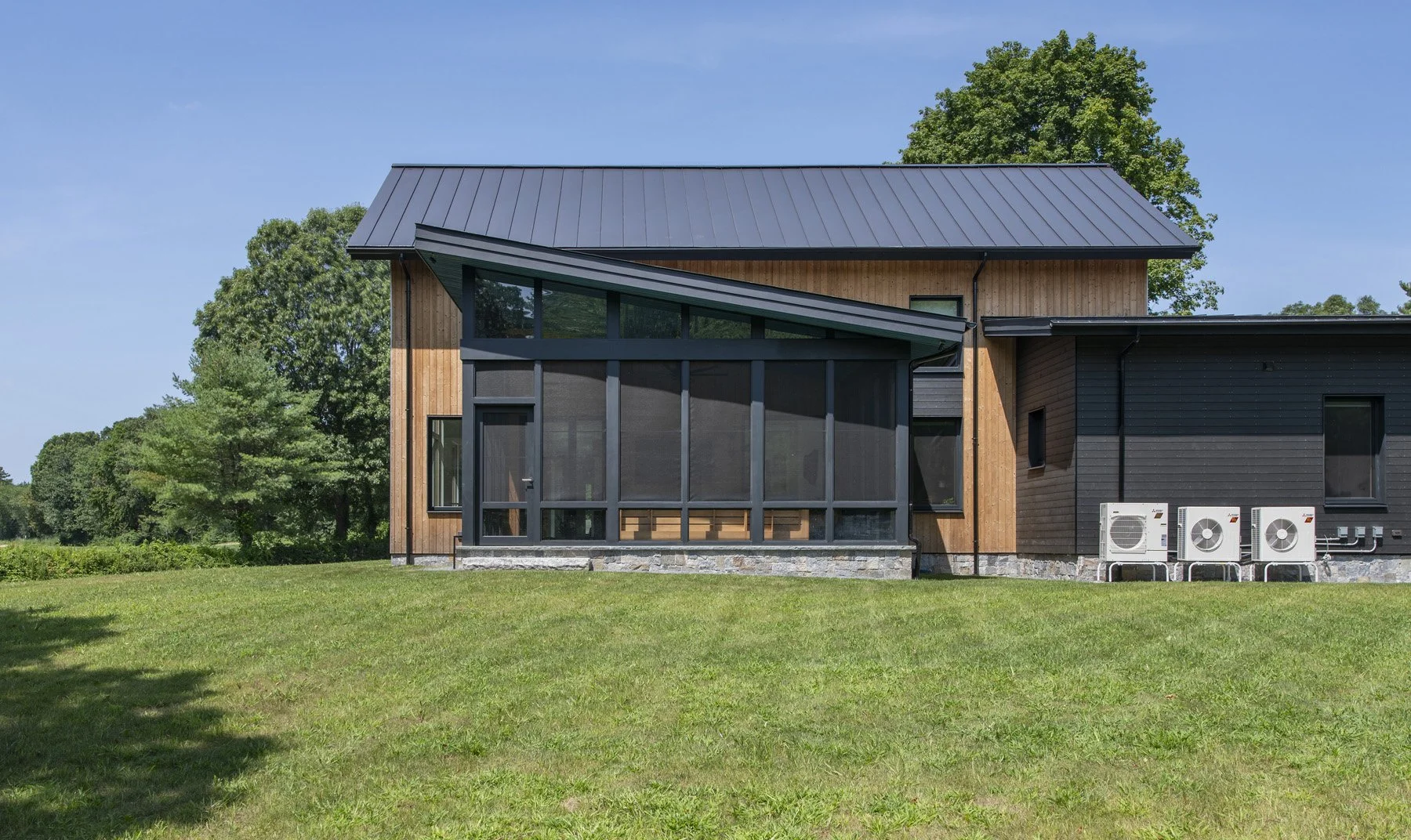
These air source heat pumps at ZED’s Stow Passive House provide heating and cooling with a minimal profile.
Why New England makes sense.
The variable climate of New England makes energy-efficient design essential. Long winters mean heating is the largest energy demand in a Massachusetts home, but a well-designed envelope can reduce that load by 75 to 90 percent. Increasingly humid summers make controlled ventilation critical for maintaining comfort and air quality year-round.
In extreme conditions—nor’easters or ice storms—a super-insulated, airtight home can maintain comfortable interior temperatures for days.
Massachusetts is also leading the country in high-performance building policy. The state's stretch energy code, adopted by more than 300 municipalities, requires new homes to be zero energy ready. Mass Save offers financial incentives for passive house construction and deep energy retrofits.
What was once considered exceptional performance is quickly becoming the baseline.

This high performance home in Hingham, MA was designed for the owners’ year round comfort; overlooking a vegetated salt marsh, it provides outdoor space for entertaining and studio space for the family artists.
What to look for in an architect
A high-performance home depends on a fully integrated team. Before hiring an architect, these are the questions that matter:
Is mechanical design integrated from the start?
Architecture and mechanical systems should be developed together—from the same energy model, beginning on day one. “It’s not a split responsibility,” Fitch says. “We provide mechanical design in-house, which means we’re working as one team, doing everything together. And with that comes a final product that's very refined.”
How early does energy modeling begin?
The most successful design teams model early. Performance data should inform decisions in real time—testing envelope assemblies, window strategies, and mechanical systems before anything is finalized.
Does the firm stay involved through construction?
Performance is built, not just designed. That requires an architect present through construction—site visits, airtightness testing, and close coordination with the entire project team to ensure the work is executed as intended.
Can they show you real numbers?
Firms operating at a high level can point to measured outcomes: airtightness testing and post-occupancy energy data from completed projects. Ask for them.
At ZeroEnergy Design, energy efficiency is where we start, it's how we design every home. See how we bring these principles to life in our portfolio, or get in touch to discuss your project. →
The decisions that matter most
Building an energy-efficient home in New England comes down to a sequence of decisions, made in the right order, by a team that understands how each one shapes the next.
Siting and orientation before the floor plan.
A continuous, airtight envelope is resolved before the mechanical system is sized.
Energy modeling informs decisions before they’re finalized.
Construction oversight ensures that what was designed gets built.
"The best projects are the ones pursuing both ends," Fitch says. "They're going to last, they're going to be comfortable, they're going to be healthy—and regardless of all of that, they're going to be beautiful, inspiring places to live.”
That is what a high-performance home delivers. Not just lower energy bills—a home that is healthier, quieter, more comfortable, and designed to endure well beyond minimum code.
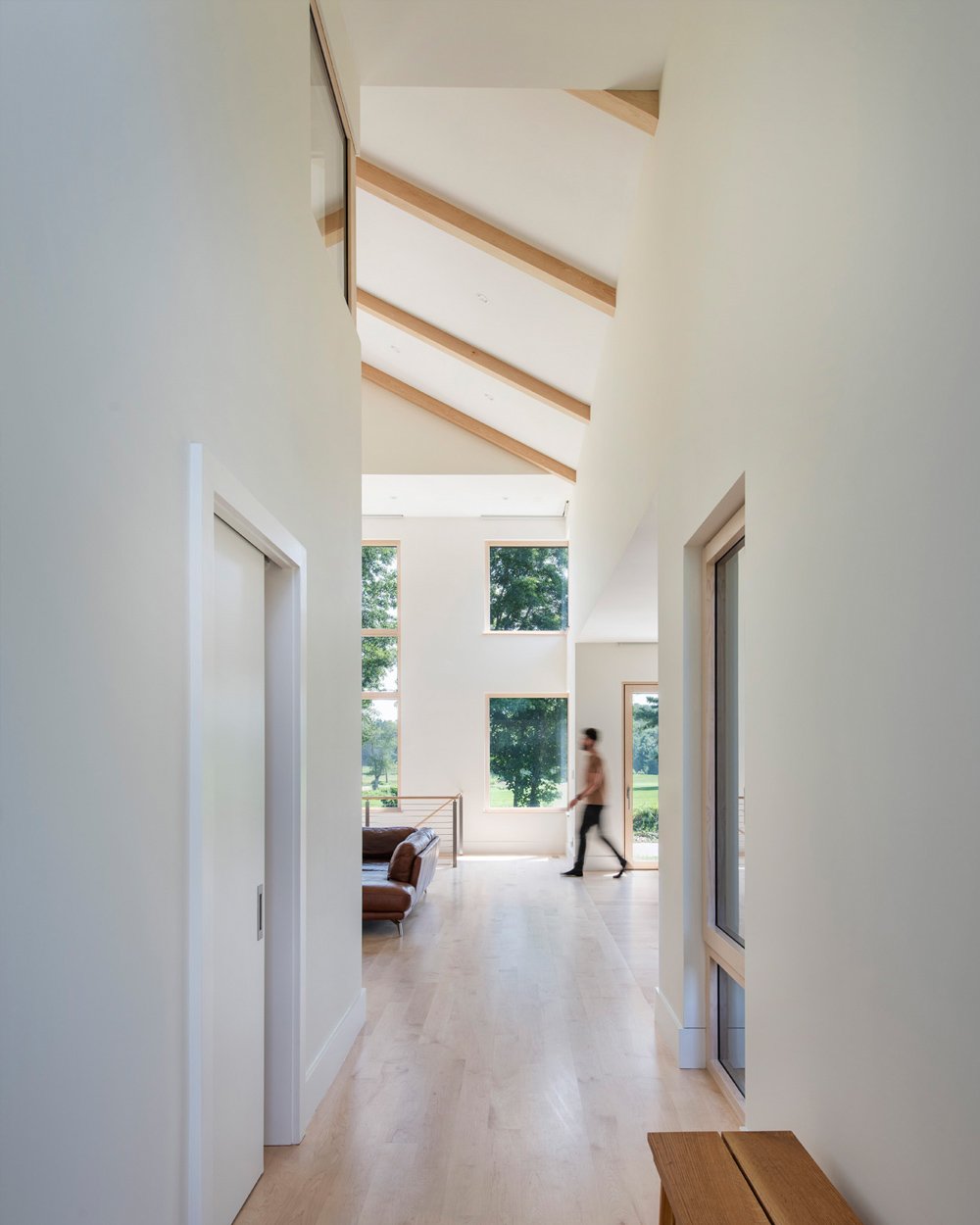
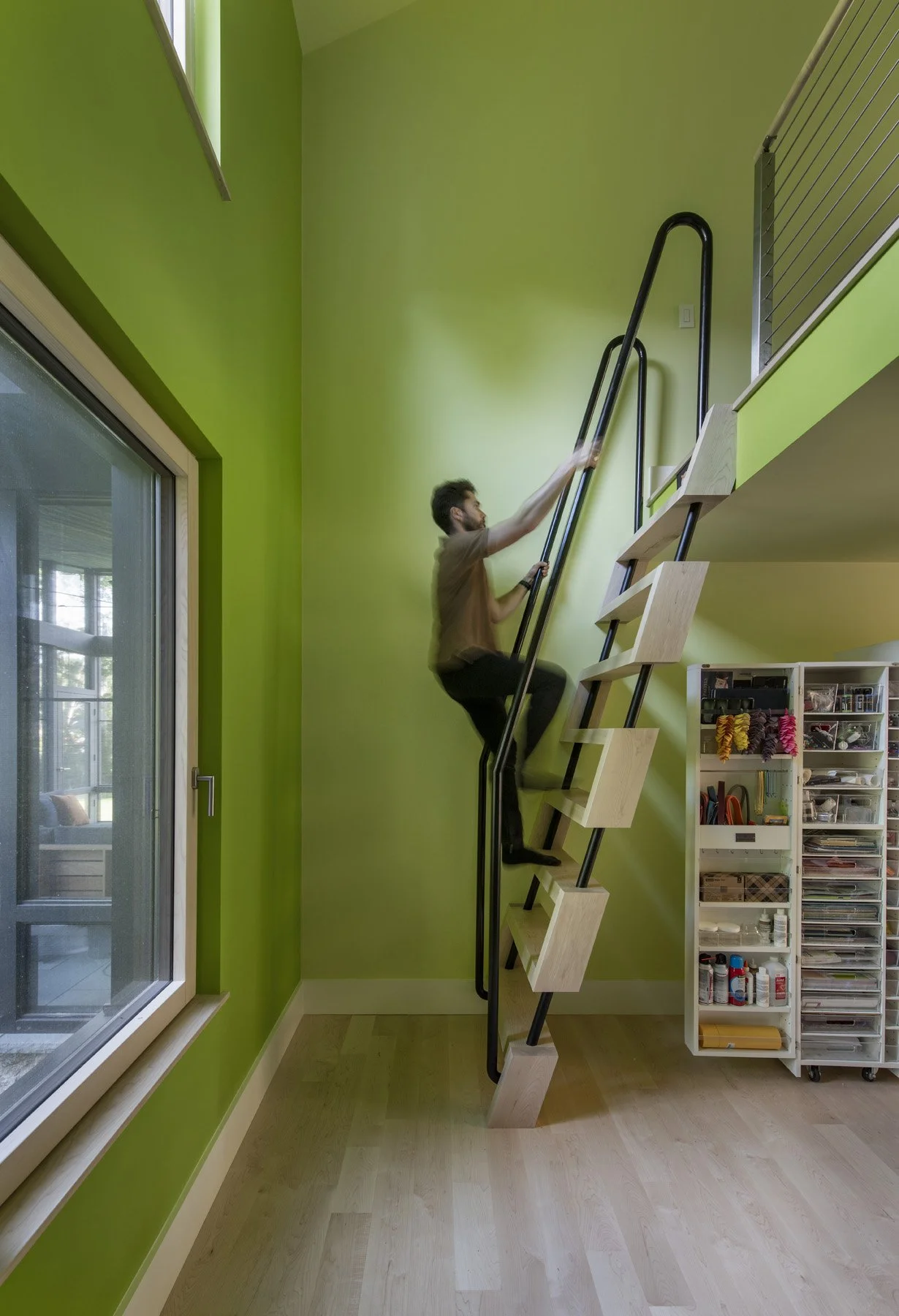
Noah Fitch, enjoying a walk (and a climb) through one of his recently completed high performance projects in Stow, MA.
Ready to start planning your energy efficient home in New England? Schedule a consultation with ZeroEnergy Design. →