
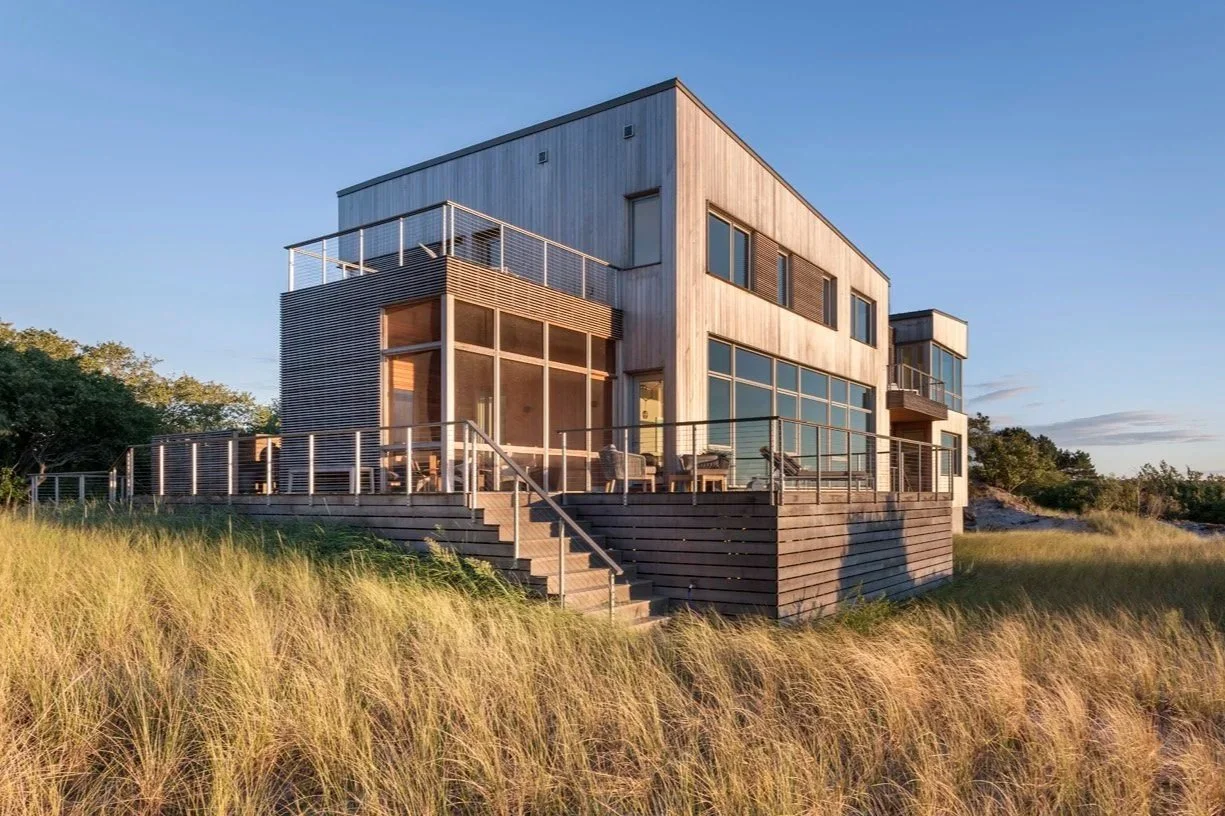
Gloucester Beachfront | Custom beachfront home
COLD CLIMATE HOMES, DESIGNED TO LAST
Custom Home and Passive House Architects in Maine
Award-winning architecture and Passive House expertise for Maine homeowners creating a custom home built to perform in the state's most demanding climate.
Sustainable Architecture Tailored to How You Live
For over 20 years, ZeroEnergy Design has created custom homes and significant renovations across New England, working with families building primary residences, second homes, and coastal retreats. As residential architects working in Maine, we bring that same approach to projects from Greater Portland and the southern Maine coast to the Midcoast towns of Brunswick, Camden, and Rockland, the Lakes Region around Sebago, and the working waterfronts and rural lots that shape so much of the state. We design distinctive residences that respond to their sites, complement neighborhood character, and deliver exceptional comfort and performance. Whether the project is a new Passive House on a wooded lot, a net-zero coastal home along the Atlantic, or a renovation of a historic house in Portland's West End, our integrated team brings architecture, mechanical design, and sustainability expertise together from day one.
Passive House Homes in Maine
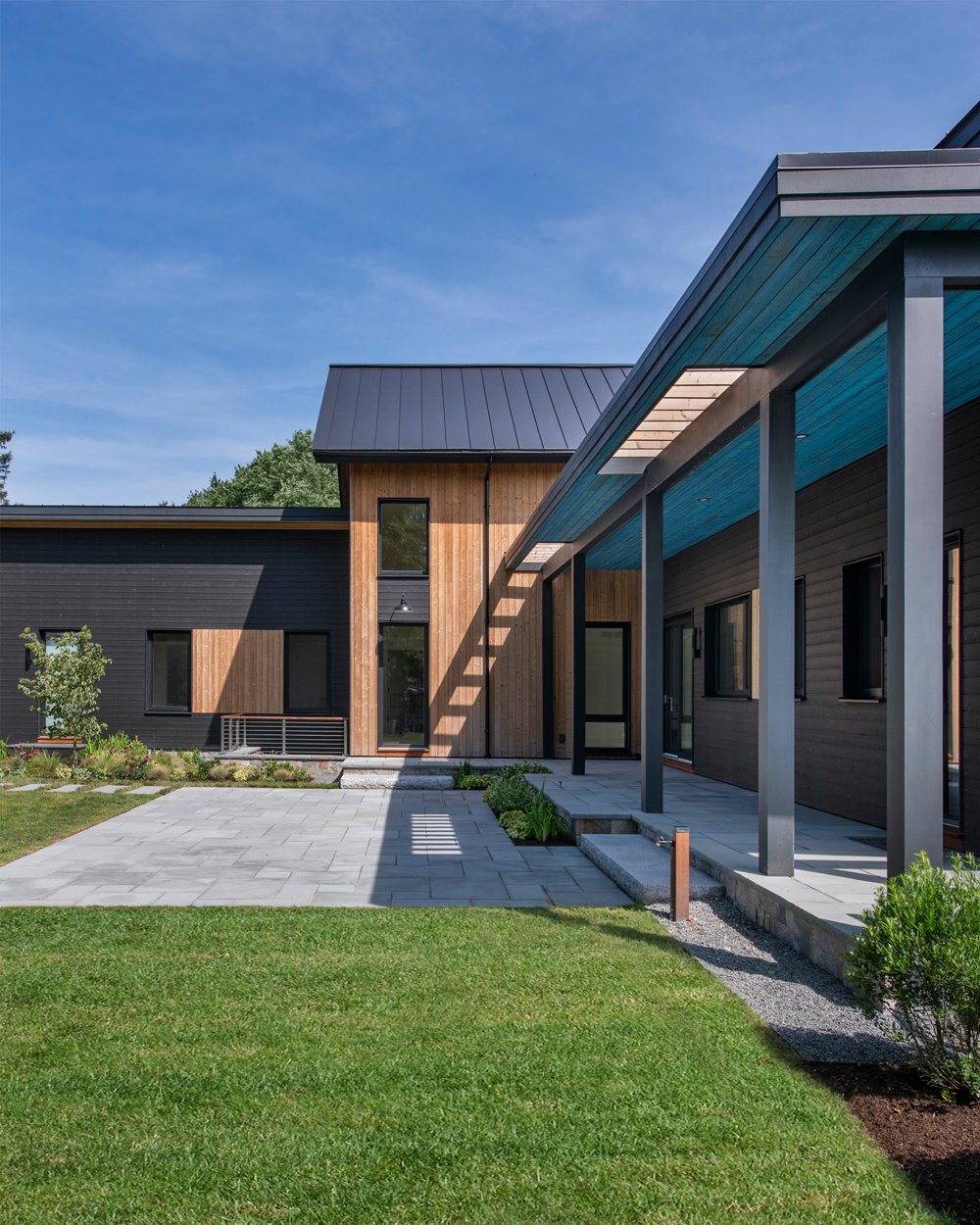
Maine has become one of the country's most active states for Passive House design and construction, and for good reason. The state's cold winters, short shoulder seasons, and often remote locations make energy performance a real economic factor, not just an environmental one. A Passive House envelope, with continuous insulation, careful air sealing, high-performance windows, and balanced ventilation, dramatically reduces heating loads in a climate where ordinary homes spend significant energy fighting the weather. The result is a home that's quiet, comfortable, healthier to live in, and far less expensive to heat year over year.
Maine's strong Passive House culture also means homeowners here are often more design-fluent about high-performance construction than in most parts of the country, which makes the design conversation easier from the start. Whether the project reads as a traditional Maine farmhouse, a shingle-style coastal cottage, or a modern lake house, the performance lives behind the walls. As architects with deep Passive House and net-zero experience, we design homes that meet rigorous performance standards while looking like they belong in Maine.
Passive House Architects in Portland and Southern Maine

Greater Portland is Maine's largest and most architecturally diverse market. The city itself has multiple historic districts, including the Old Port, Western Promenade, Stroudwater, and parts of Munjoy Hill and the Eastern Promenade, each administered by Portland's Historic Preservation Board. The architectural character ranges from Federal-era homes near the harbor to Victorian residences in the West End and mid-20th century neighborhoods extending into Cape Elizabeth, South Portland, Falmouth, and Yarmouth along Casco Bay.
Southern Maine offers a different set of design conditions. The coastal towns of York, Kennebunk, Kennebunkport, Wells, and Ogunquit are known for shingle-style summer homes, working harbors, and a long tradition of summer residential architecture going back to the late 19th century. As architects working across Maine, we approach Greater Portland and the southern coast with attention to historic district requirements where they apply, shoreland zoning along the water, and the architectural patterns that make these places distinct.
Featured Projects from Nearby

Primary Residence | pEUI: 1.5kBtu/sf/yr
Nestled on a beachfront site, this home provides incredible ocean views from three sides of the house while maximizing privacy from neighboring properties.
Gloucester Beachfront

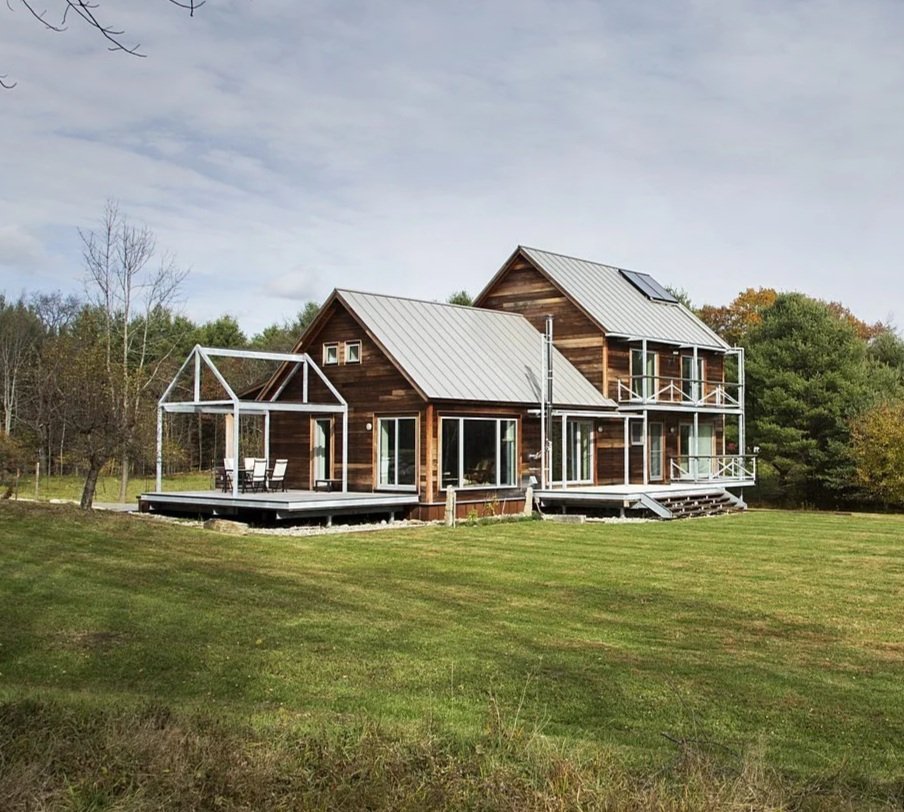
Primary Residence | pEUI: 4.5kBtu/sf/yr
A blend of features were carefully balanced to develop a final design that has an efficient footprint, meets the Passive House Standard (PHIUS+ Certified), and takes the form of a traditional farmhouse with some modern twists both inside and out.
Farmstead Passive House

Recognition & Credentials
AWARDS & RECOGNITION
Best of Boston Home 2020: Best Sustainable Architect
Architect Magazine Top 50 Nationwide for Sustainability
Best of Houzz Design Award (2012 - 2026)
AIA Small Firms/Small Projects Award
PRISM Awards Gold Winner
CERTIFICATIONS
Five Certified Passive House Consultants on staff
WBE-Certified firm
Expertise in PHIUS+ Certification, LEED, Living Building Challenge, and REVEAL
MEDIA COVERAGE
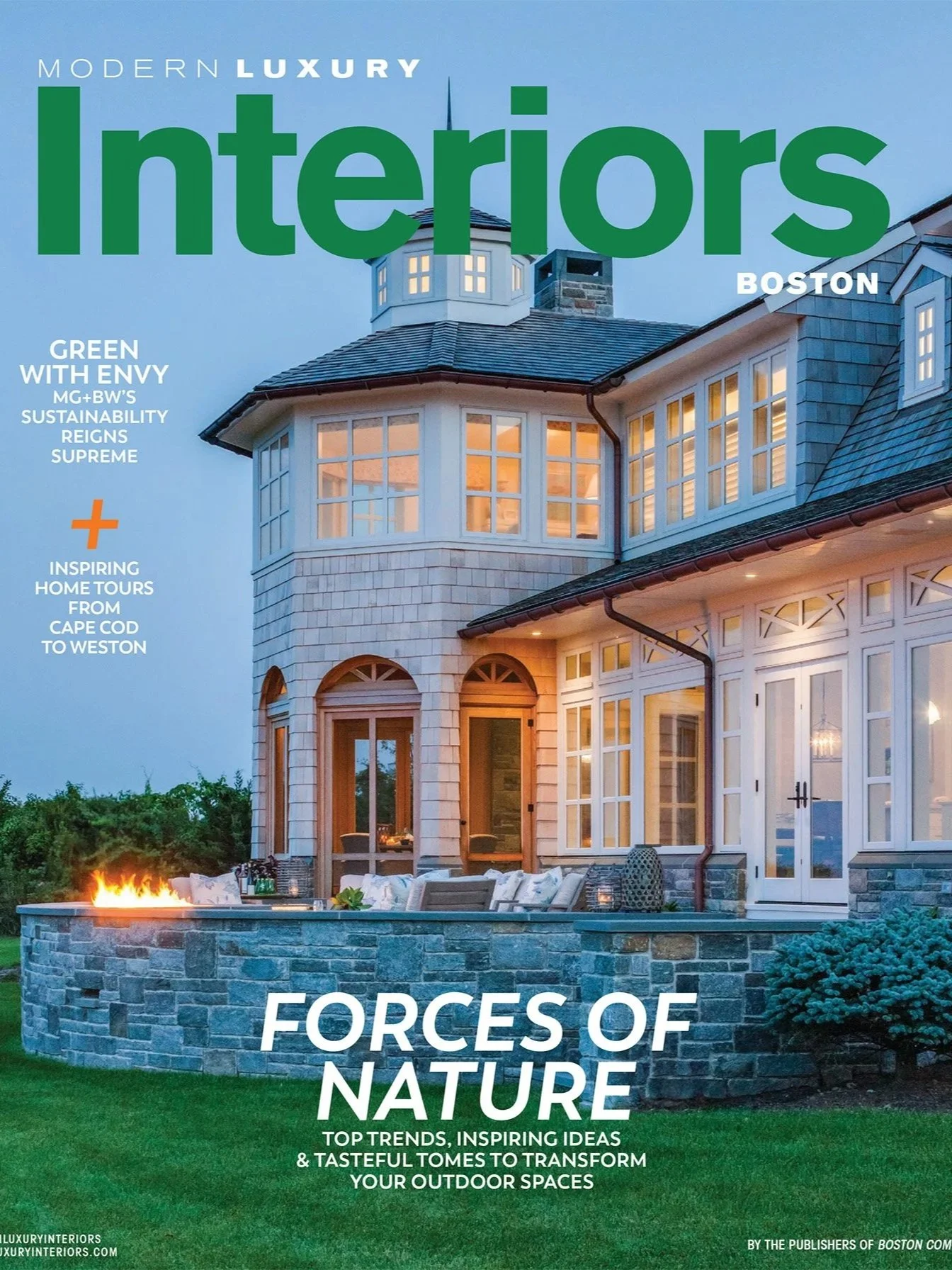
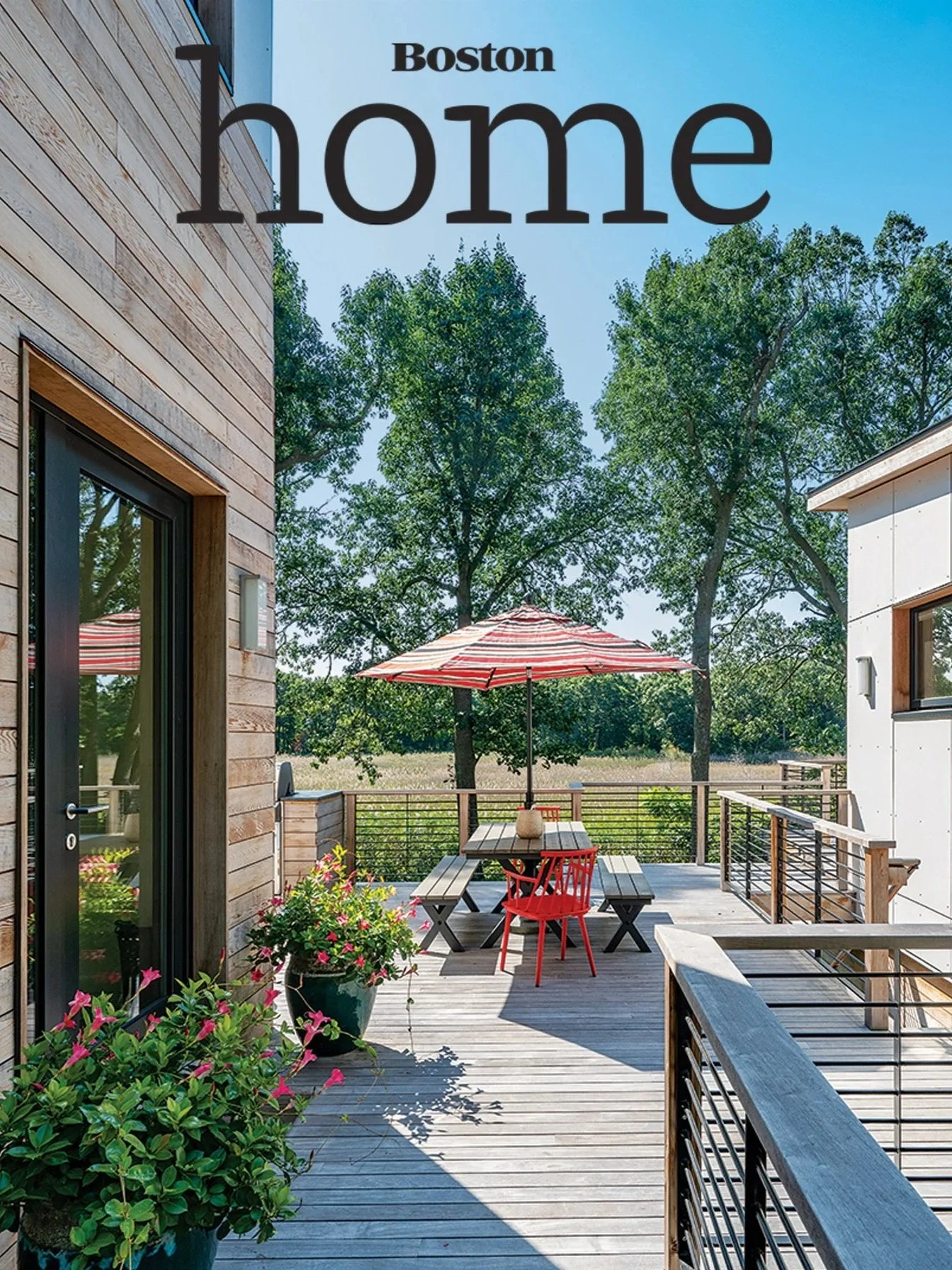
Featured in: New York Times, Architectural Digest, Forbes, Dwell, New England Home, Boston Home, Boston Globe, Fine Homebuilding, Modern Luxury Interiors Boston, Green Building & Design, and Northshore Home. Energy expertise featured on NPR.








Frequently Asked Questions
-
From the start of our design process to move-in, most projects take 24 to 36 months. This includes site analysis and schematic design (2-3 months), permitting and approvals (3-6 months, longer if shoreland zoning review, historic district approvals, or wetlands review is required), contractor selection (1-2 months), design development and construction documents (3-5 months), and construction (12-20 months). Maine construction can run on the longer end given seasonal weather constraints and the logistics of building in less-developed areas. We'll provide a detailed timeline specific to your project at the beginning of the design process.
-
Yes. We often work with clients and their Realtors before a property purchase to provide site analysis. In Maine, this is especially valuable given the prevalence of shoreland zoning (which applies to land within 250 feet of great ponds, rivers, the coast, and many wetlands), historic district overlays in towns across the state, and the variation in local zoning. We assess buildable area, shoreland setbacks, solar access, well and septic feasibility, and overall project feasibility so you can make a more informed acquisition decision before starting the design process.
-
A few important differences. Maine's Mandatory Shoreland Zoning Act is one of the strictest in the country, with state-mandated setbacks of 100 feet from great ponds and rivers, and 75 feet from other water bodies. Maine has a centralized state building code (the Maine Uniform Building and Energy Code, or MUBEC), which provides more predictability than MA's local stretch code variations. Most Maine homes outside cities rely on private wells and septic systems. And Maine's cold-climate construction generally demands thicker wall assemblies, more attention to thermal bridging, and higher-performance windows than typical MA construction.
-
Maine's Mandatory Shoreland Zoning Act applies to all land within 250 feet of the normal high-water line of great ponds (10 acres or more), rivers, and saltwater bodies; within 250 feet of the upland edge of coastal and freshwater wetlands; and within 75 feet of certain streams. Within the shoreland zone, structures generally must be set back at least 100 feet from great ponds and rivers, and 75 feet from other water bodies. There are also restrictions on vegetation removal within 75 feet of the water, lot coverage limits, and expansion restrictions on nonconforming structures. Many of Maine's most desirable lots fall within the shoreland zone, so understanding these requirements before purchase is essential.
-
Portland has multiple local historic districts, including the Old Port, Western Promenade, Stroudwater, and parts of the Eastern Promenade and Munjoy Hill, each administered by Portland's Historic Preservation Board. Beyond Portland, towns like Castine, Wiscasset, Bar Harbor, Camden, and parts of Kennebunkport have their own preservation overlays. The specific review process and standards depend on the town, but typically any exterior change visible from a public way requires review before a building permit can be issued. We assess preservation requirements on a project-by-project basis early in design.
-
No. Our homes are designed to be beautiful first. High-performance is not a visible aesthetic. It's integrated into our process and design decisions to support comfort, durability, and long-term value. In Maine, where homes range from classic New England farmhouses to shingle-style coastal cottages to modern lake retreats, we tailor each project to its setting while building in the performance that makes a home better year after year.
-
Absolutely. Maine has been one of the most active Passive House markets in the country since the late 2000s, when the state's first PHIUS-certified home was built. The state's cold winters and remote rural locations make Passive House design particularly compelling: heating loads drop dramatically, mechanical systems can be smaller and simpler, and the home becomes far more comfortable in extreme weather. Maine homeowners are also often more familiar with Passive House principles than in most parts of the country, which makes the design conversation easier from the start.
-
It works well, and we plan for it. Greater Portland is about a two-hour drive from our Boston office, with most of southern Maine within two to three hours and the Midcoast within three to four. We travel for site visits as often as a project requires, including site analysis, design reviews, contractor walkthroughs, and construction observation. Between visits, we use cloud-based tools, video conferencing, and clear communication routines that keep clients and consultants aligned regardless of distance. We coordinate with local Maine builders, surveyors, civil engineers, code enforcement officers, and town officials. Many of our Maine clients are families with ties to the Boston area who appreciate working with a firm that knows both regions.
Designing Custom Homes in Maine
Maine is the largest state in New England by area, home to roughly 1.4 million residents along 3,500 miles of coastline and across vast forested interior. Its housing stock spans 18th-century capes and Federal-era homes in coastal towns like Castine, Wiscasset, and Kennebunkport, Victorian and shingle-style summer homes throughout Mount Desert Island and the Midcoast, working-waterfront cottages along the lobster coast, and contemporary new construction in Portland and the lakes regions. Building regulations include the Mandatory Shoreland Zoning Act (applying to 250 feet from great ponds, rivers, and the coast), the statewide Maine Uniform Building and Energy Code (MUBEC), and local historic district commissions in Portland and other heritage towns. Maine's combination of demanding climate, deep architectural traditions, and one of the country's most active Passive House communities makes it a strong fit for our approach to renovation and new construction.
Locations are approximate. Cities/Towns and Neighborhoods are listed to protect our clients’ privacy.
Let's talk about your Maine project
Whether you're planning a new custom home, a major renovation, or exploring what's possible on a property you're considering — we're here to help.