
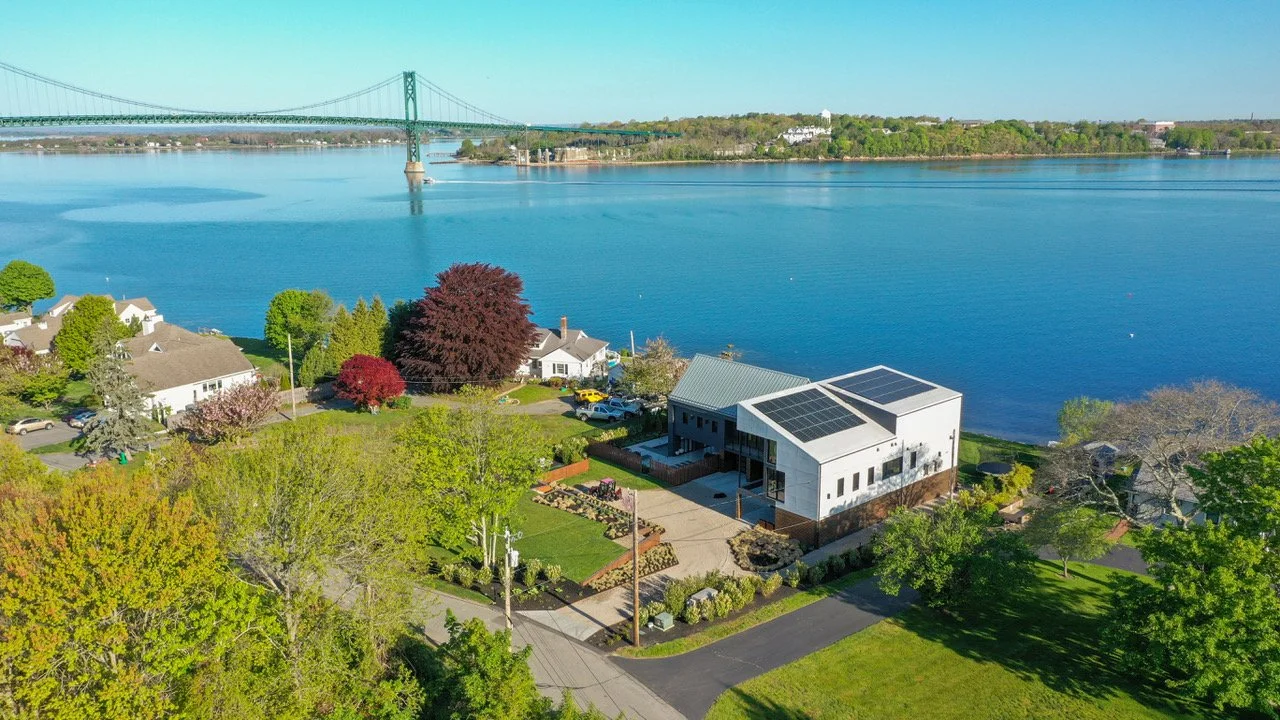
Mt. Hope Modern Home | Portsmouth, RI
OCEAN STATE HOMES, BUILT FOR THE COAST
Custom Home and Passive House Architects in Rhode Island
Award-winning architecture for Rhode Island homeowners creating a custom home that's beautiful, comfortable, and built for the realities of coastal living.
Sustainable Architecture Tailored to How You Live
For over 20 years, ZeroEnergy Design has created custom homes and significant renovations across eastern Massachusetts, working with families building primary residences, second homes, and coastal retreats. As custom home architects working in Rhode Island, we bring that same approach to projects from Newport, Middletown, and Jamestown to Providence and College Hill, the East Bay towns of Bristol, Warren, and Barrington, and the South County coast around Narragansett, Westerly, and Charlestown. We design distinctive residences that respond to their sites, complement neighborhood character, and deliver exceptional comfort and performance. Whether the project is a renovation of a historic home in Newport, a new build along Narragansett Bay, or a Passive House on a South County beach lot, our integrated team brings architecture, mechanical design, and sustainability expertise together from day one.
Passive House Homes in Rhode Island

Rhode Island's coastal climate makes a strong case for Passive House design. The state experiences cold winters, hot humid summers, and significant moisture exposure along its 400 miles of coastline, all of which an ordinary home struggles to manage. A Passive House envelope, with continuous insulation, careful air sealing, high-performance windows, and balanced ventilation, addresses these conditions directly. The result is a home that's quiet, comfortable, and dramatically less expensive to operate, with substantially better moisture control in a salt-air environment. Importantly, none of this dictates how the home looks. A Passive House in Rhode Island can read as a Newport-style shingled cottage, a Colonial Revival residence, or a modern coastal home. The performance lives behind the walls.
Custom Home Architects in Newport and Providence

Newport's Historic District is among the largest and most architecturally significant in the country, covering homes from the colonial period through the Gilded Age. Federal merchant homes line the streets near the harbor, Victorian-era residences anchor the older neighborhoods, and shingle-style summer cottages and Gilded Age mansions define the Bellevue Avenue corridor. The Newport Historic District Commission reviews any exterior change visible from a public way, with authenticity standards that hold modern alterations to a high bar. We approach Newport projects with attention to material specificity, historically appropriate proportions, and the construction details the city's preservation review requires.
Providence offers a different but equally distinctive set of design conditions. The College Hill neighborhood is the largest local historic district in the state with more than 900 properties, anchored by Benefit Street's "Mile of History" and concentrations of Federal and Greek Revival architecture. The Providence Historic District Commission oversees seven additional districts, each with its own character, from Armory and Broadway to South Elmwood and Stimson Avenue. As architects working across Rhode Island, we have experience with the preservation review processes used by Newport, Providence, and the state's 18 Certified Local Government communities, from Bristol and East Greenwich to Wickford and Pawtucket.
Featured Rhode Island Projects

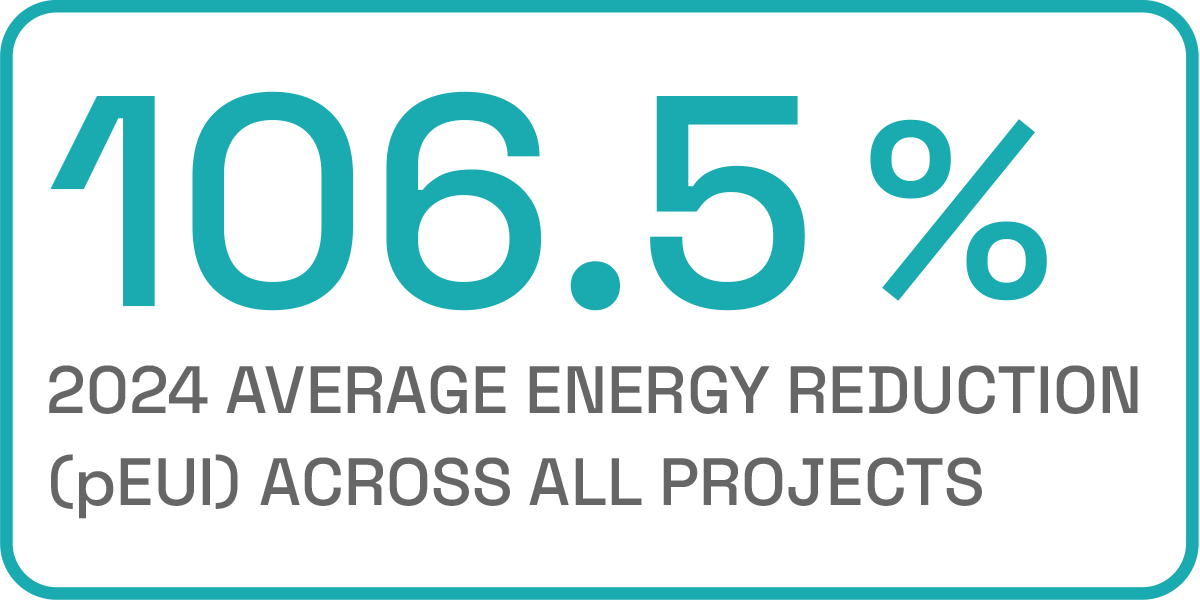
Primary Residence | pEUI: 0.0kBtu/sf/yr
A net positive, all-electric single family home in Providence's East side. The home reconsiders the idea of open-concept space and explores potential space allocations for cooking, dining, and living to create a unique heart of the home.
Providence Net Zero


Primary Residence | pEUI: 2.8kBtu/sf/yr
Located in the coastal neighborhood of Bristol Ferry/Common Fence Point Rhode Island with a commanding ocean view, this seaside modern home welcomes you to its warm stylish interiors, while quickly shifting your gaze towards the sea.
Mt. Hope Modern

Recognition & Credentials
AWARDS & RECOGNITION
Best of Boston Home 2020: Best Sustainable Architect
Architect Magazine Top 50 Nationwide for Sustainability
Best of Houzz Design Award (2012 - 2026)
AIA Small Firms/Small Projects Award
PRISM Awards Gold Winner
CERTIFICATIONS
Five Certified Passive House Consultants on staff
WBE-Certified firm
Expertise in PHIUS+ Certification, LEED, Living Building Challenge, and REVEAL
MEDIA COVERAGE
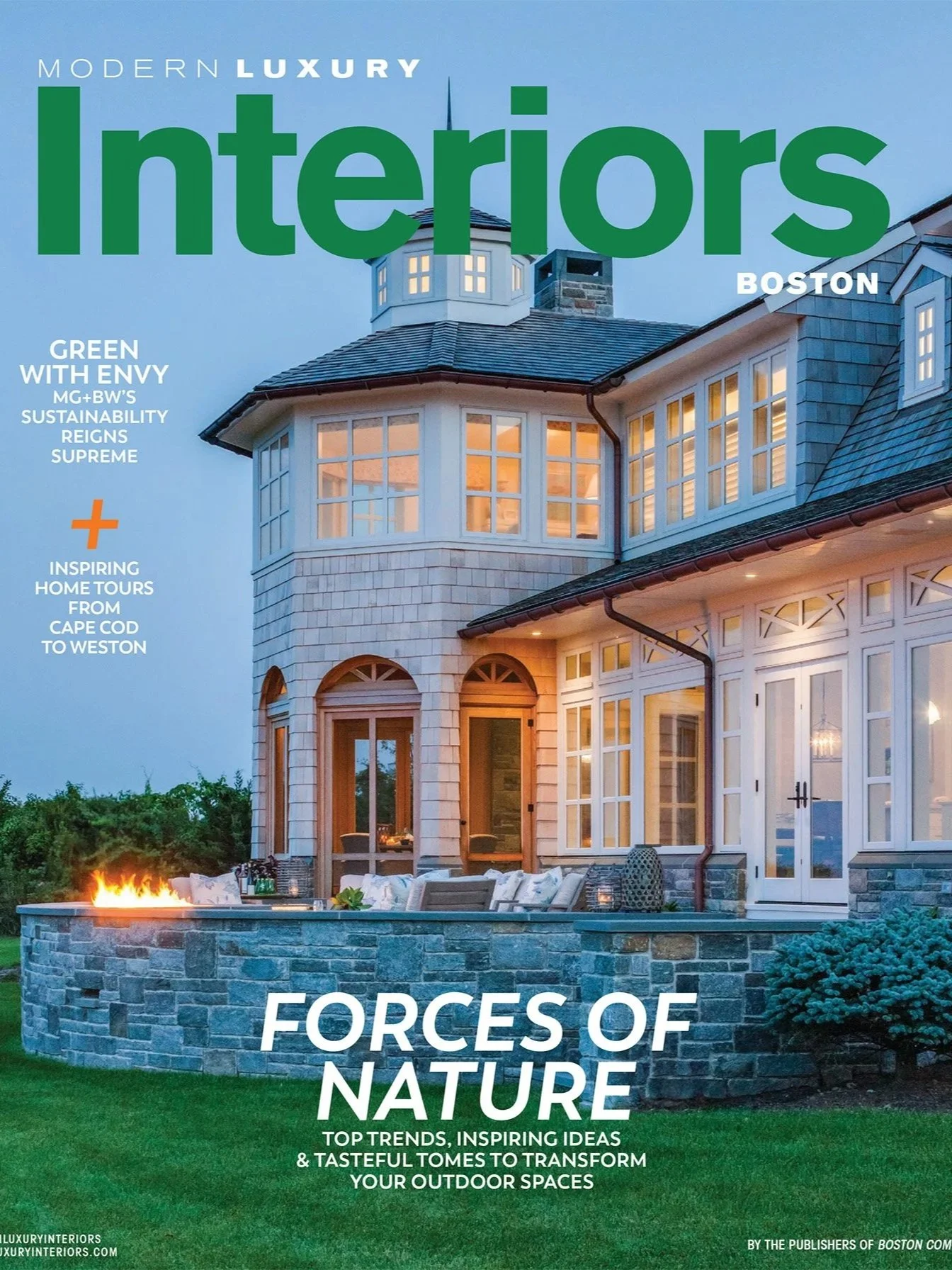
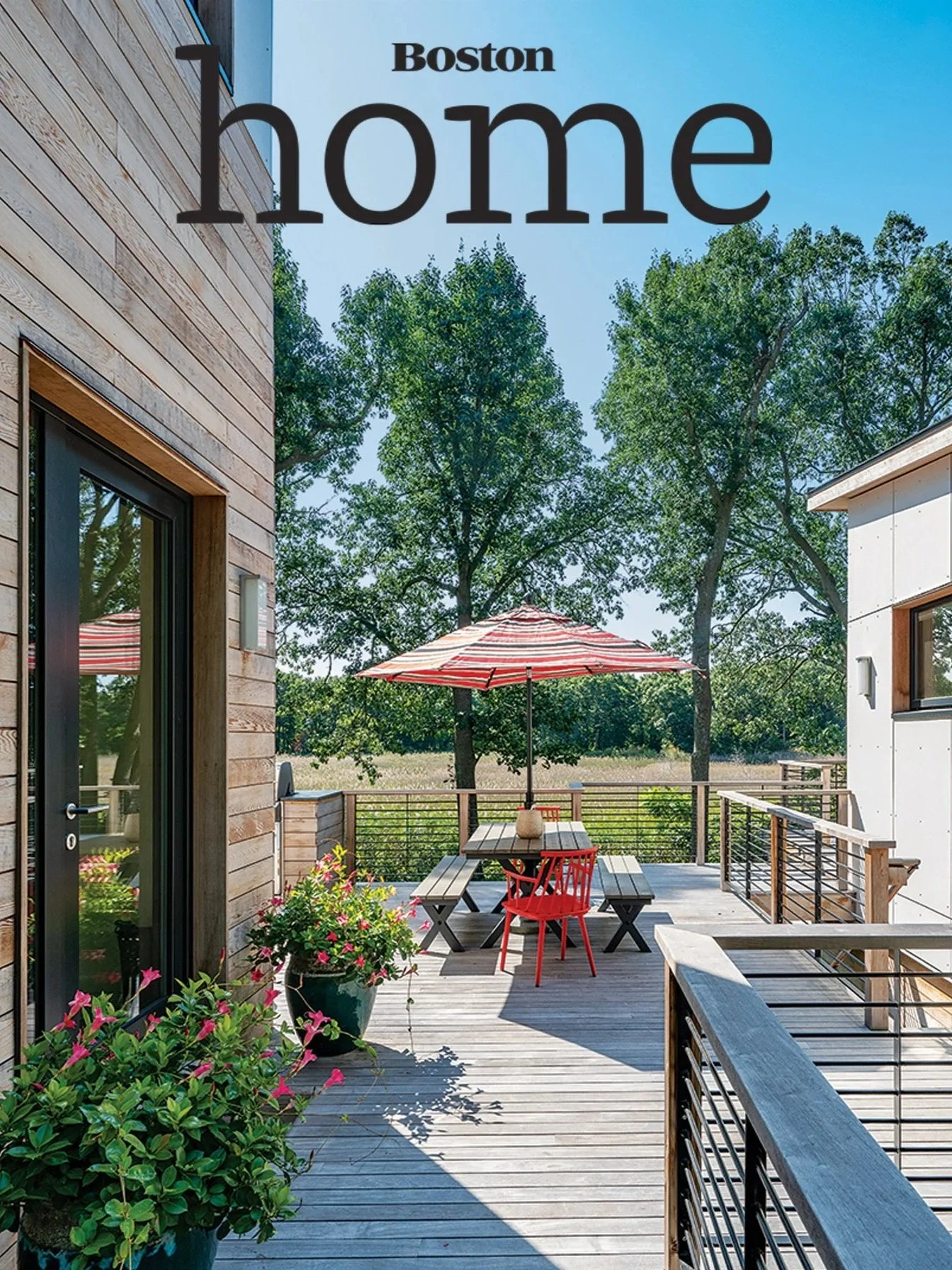
Featured in: New York Times, Architectural Digest, Forbes, Dwell, New England Home, Boston Home, Boston Globe, Fine Homebuilding, Modern Luxury Interiors Boston, Green Building & Design, and Northshore Home. Energy expertise featured on NPR.








Frequently Asked Questions
-
From the start of our design process to move-in, most projects take 24 to 36 months. This includes site analysis and schematic design (2-3 months), permitting and approvals (3-8 months, often longer if CRMC review, historic district commission approval, or wetlands review is required), contractor selection (1-2 months), design development and construction documents (3-5 months), and construction (12-18 months). Coastal projects subject to CRMC jurisdiction typically run on the longer end. We'll provide a detailed timeline specific to your project at the beginning of the design process.
-
Yes. We often work with clients and their Realtors before a property purchase to provide site analysis. In Rhode Island, this is especially important given the prevalence of CRMC jurisdiction along the coast, historic district overlays in cities and towns across the state, FEMA flood zones for waterfront properties, and variation in local zoning rules. We assess buildable area, coastal setbacks, solar access, and overall project feasibility so you can make a more informed acquisition decision before starting the design process.
-
A few important differences. Rhode Island has a centralized state building code, whereas Massachusetts allows local stretch energy code variations. RI's most distinctive regulatory feature is the Coastal Resources Management Council (CRMC), which has jurisdiction over any property within 200 feet of a coastal feature and applies setbacks calculated from erosion rates rather than fixed distances. RI also has 18 Certified Local Government communities with historic district commissions, each with its own review process and standards. Coastal historic concentrations in Newport, the East Bay, and South County are extensive and require careful design coordination from the start.
-
CRMC requires a permit for any construction or alteration within 200 feet of a coastal feature, including beaches, dunes, coastal banks, coastal wetlands, and the inland edge of any tidal water. Setbacks are calculated using CRMC's shoreline change maps and typically require 30 times the average annual erosion rate for single-family homes. Properties may also be subject to coastal buffer zone requirements, FEMA V-zone construction standards (breakaway walls, elevated first floors, salt-resistant materials), and nitrogen-reducing septic technology in sensitive watersheds. We assess CRMC implications during site analysis and design within the buildable envelope from day one.
-
Rhode Island has 18 Certified Local Government communities, each with its own Historic District Commission. Providence has nine local historic districts including the College Hill area, which contains the largest concentration of historic properties in the state. Newport's Historic District is one of the largest and most stringent in the country, with strict authenticity requirements for materials and construction methods on properties dating from the colonial through Gilded Age periods. Bristol, East Greenwich, Wickford, Pawtucket, and Warwick all have their own local historic districts. Properties within these districts require a Certificate of Appropriateness before exterior changes visible from a public way can proceed.
-
No. Our homes are designed to be beautiful first. High-performance is not a visible aesthetic. It's integrated into our process and design decisions to support comfort, durability, and long-term value. In Rhode Island, where homes range from colonial farmhouses to shingled coastal cottages to Gilded Age estates and contemporary new construction, we tailor each project to its setting while building in the performance that makes a home better year after year.
-
Absolutely. Rhode Island's coastal climate, with cold winters, hot humid summers, and significant moisture from the surrounding ocean, makes a strong case for high-performance construction. A tight, well-insulated envelope dramatically reduces energy costs, controls humidity, and creates a more comfortable home in every season. Coastal salt air also makes durability a real concern, and Passive House construction methods generally translate to better moisture management and longer-lasting assemblies. Solar access varies by site but is often favorable on coastal and South County lots.
-
It works well, and we're set up for it. Most of Rhode Island is within a 60- to 90-minute drive of our Boston office, and we travel for site visits as often as a project requires, including site analysis, design reviews, contractor walkthroughs, and construction observation. Between visits, we use cloud-based tools, video conferencing, and clear communication routines that keep clients and consultants aligned regardless of distance. We coordinate with local RI builders, surveyors, civil engineers, CRMC consultants, and town officials, and we're experienced at managing the permitting processes used in Rhode Island's coastal and historic communities.
Designing Custom Homes in Rhode Island
Rhode Island is the smallest state by area but home to one of America's most concentrated collections of historic architecture, with a built environment shaped by 400 miles of coastline along Narragansett Bay and the Atlantic. Its housing stock spans Colonial homes in Newport's Historic District and Providence's College Hill, Gilded Age mansions along Bellevue Avenue, shingle-style coastal homes in Watch Hill and Newport County, and bayside cottages across South County and the East Bay. Building regulations include local historic district review across 18 Certified Local Government communities, Coastal Resources Management Council (CRMC) jurisdiction over any property within 200 feet of a coastal feature, and FEMA flood zone requirements. Rhode Island's combination of architectural depth, coastal complexity, and homeowners who value craft and longevity makes it a strong fit for our approach to renovation and new construction.
Locations are approximate. Cities/Towns and Neighborhoods are listed to protect our clients’ privacy.
Let's talk about your Rhode Island project
Whether you're planning a new custom home, a major renovation, or exploring what's possible on a property you're considering — we're here to help.